
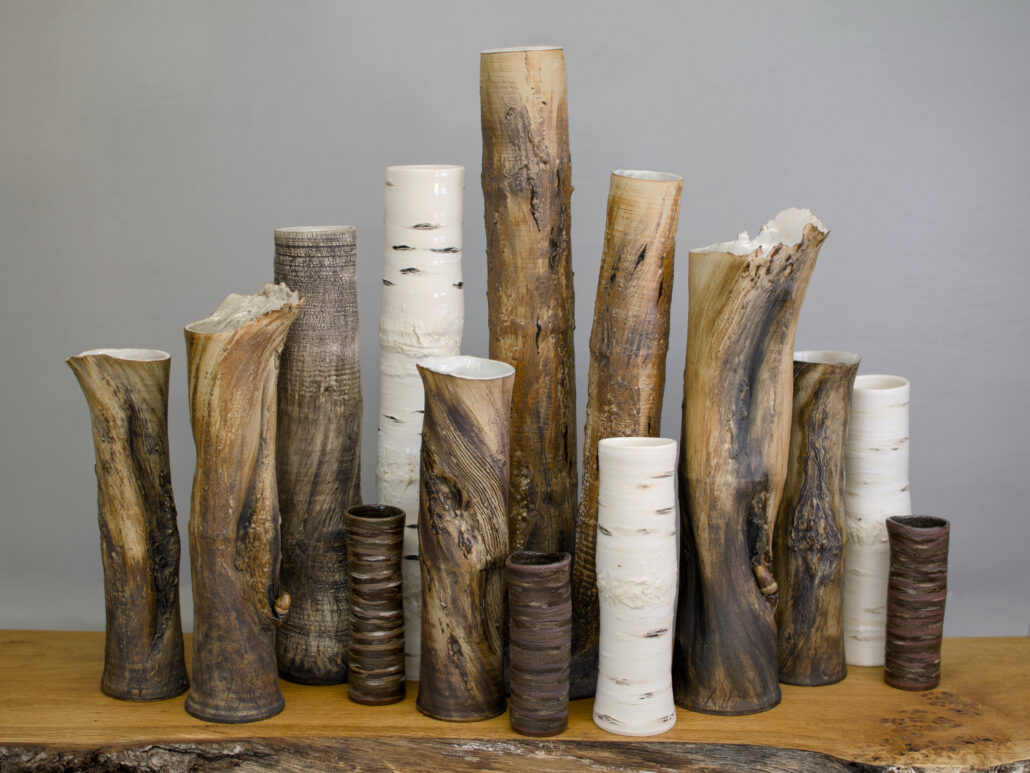
Ceramic Vessels Versus Ceramic Vases: Why Language Matters in Fine Art Ceramics
The words we use around handmade ceramics carry meaning. They shape how an object is understood, how it is placed within a home or gallery, and how it is valued. This is why the difference between ceramic vessels and ceramic vases matters to me.
At first, the distinction may seem small. A vase holds flowers. A vessel holds something too. Yet in my own ceramic practice, the word vessel feels more open, more spacious and more aligned with the way I work with clay. A vase often arrives with its function already decided. It is expected to hold stems, sit on a table, and support an arrangement. A vessel, for me, holds wider possibility.
It may hold water. It may hold flowers. It may hold memory, stillness, atmosphere or a connection to nature. It may hold nothing visible at all, while still holding presence within a room.
This is why I often describe my work as ceramic vessels rather than ceramic vases. The word vessel allows the piece to remain alive in meaning. It does not close the object down too quickly.
What is the difference between a ceramic vessel and a ceramic vase?
A vase is usually understood as a container for cut flowers or as a decorative object. This meaning is familiar and useful, especially in domestic language and interior styling. For many people searching online, phrases such as ceramic vase, handmade ceramic vase, sculptural vase or custom ceramic vases for interiors will feel natural.
A vessel carries a broader association. It is still a container, although what it contains is less fixed. The word vessel can refer to bowls, pots, cups, bottles, ceremonial objects, ships and even the body itself through blood vessels. It suggests containment, movement and capacity.
This breadth is important in fine art ceramics. A vessel can refer to form without reducing the work to a single use. It can suggest function while allowing the object to operate as sculpture, memory, gesture or symbolic presence.
In this sense, ceramic vessels versus ceramic vases is not only a question of terminology. It is a question of intention.
Why might a ceramicist have an issue with the word vase?
Some ceramicists and potters are entirely comfortable with the word vase, and there is nothing wrong with that. The vase has a long and beautiful history across cultures, rituals, interiors and collections. It has carried flowers, stories, decoration, status and ceremony for thousands of years.
The concern arises when the word vase becomes too limiting. For a maker working with sculptural ceramic vessels, the term can imply that the object’s purpose is already known. It can suggest a relationship with flowers before the viewer has had the chance to meet the form on its own terms.
For artists working in contemporary fine art ceramics, language can become part of the practice. Calling a piece a vessel may gently ask the viewer to stay with it for longer. It may invite them to notice its surface, weight, opening, shadow, curve and silence before deciding what it is for.
This matters because handmade ceramics often sit between categories. They may be functional, sculptural, decorative, contemplative and collectible at the same time. A vessel can hold that complexity more comfortably.
Craft, fine art and the question of function
The ongoing craft versus fine art discussion has followed ceramics for a long time. Clay has often been associated with utility, domesticity, labour and the hand. These associations are valuable, and they are part of the material’s strength. They also mean that ceramics have sometimes had to work harder to be recognised within fine art contexts.
Historically, craft was often understood through use. A crafted object could be worn, held, served from or lived with. Fine art was more often separated from daily function and placed within galleries, museums and critical discourse. Ceramics unsettles this separation because clay belongs naturally in both places.
A ceramic object can sit on a dining table and in a museum. It can be held in the hand and viewed as sculpture. It can be intimate and conceptually rich. This is one of the reasons I find clay so compelling.
The vessel helps bridge this conversation. It acknowledges the long history of pots, containers and functional forms while allowing the work to move into a more reflective and sculptural space.
It respects craft without being confined by use.
Why Sonya Wilkins uses the word vessel
In my own work, vessel feels truthful because I am interested in what clay can hold beyond function. My research question, Can ceramic vessels become activators for wellbeing?, continues to guide my practice. I am drawn to the possibility that an object made from earth can support a sense of calm, grounding and biophilic connection within a space.
When I create sculptural ceramic vessels, I am not thinking only about what they might physically contain. I am considering how they may influence the atmosphere around them. I am thinking about the relationship between clay, nature and human experience.
A vessel can hold the memory of landscape. It can hold the trace of touch. It can hold the quiet rhythm of making. It can also become a point of stillness within an interior, offering a sense of connection to the natural world.
For interior designers, collectors and galleries, this distinction has practical value too. A sculptural vessel can be placed as a focal point, a grounding presence or a contemplative object. It can be specified within interior projects as ceramic art rather than simply as a vase for flowers. This is particularly relevant when choosing statement ceramics for luxury interiors, commissioning made to order ceramic pieces or selecting collectable ceramic artists whose work carries depth and material presence.
Ceramic vessels as containers of possibility
The phrase container of possibilities feels important to me. It suggests that the work remains open. A ceramic vessel does not need to declare everything at once. It can change in meaning depending on where it is placed, who lives with it and how light moves across it.
In a gallery, the vessel may be read through form, material research and conceptual intent. In a home, it may become part of daily life, quietly encountered in passing. In an interior design project, it may help bring texture, depth and natural presence into a carefully considered space.
This is where the vessel becomes more than an object. It becomes a relationship.
The opening of a vessel is also significant. An opening suggests interiority. It invites the imagination inward. Even when empty, the vessel contains space. That inner space can feel symbolic, holding quiet, breath, memory or possibility.
A vase may be completed by flowers. A vessel can be completed by attention.
Why did the London gallery Vessel choose that name?
The London gallery Vessel offers an interesting point of reflection. Vessel Gallery, founded in Notting Hill in 1999, presents museum-quality sculptural artworks in contemporary art glass, ceramics, metal and wood, and works with collectors, museums, interior designers and corporate projects.
I have not found a published statement explaining the precise reason for the gallery’s name. Even so, the choice feels deeply appropriate within the world it occupies. Vessel is a word spacious enough to hold craft, design, sculpture, interior object, collectable artwork and commission. It does not reduce the work to one material, one function or one setting.
For a gallery showing contemporary craft and sculptural art, vessel is a generous word. It allows the object to be functional, symbolic, formal, architectural or contemplative. It allows glass, ceramic, wood and metal to sit within a shared language of containment and presence.
That is perhaps the quiet strength of the word. It carries ancient associations and contemporary relevance at the same time.
Ceramic vessels for interiors, galleries and collectors
For those searching for ceramic vessels versus ceramic vases, the choice may depend on what kind of relationship they want with the object.
A ceramic vase may be the right word when the purpose is floral display, decoration or styling. A ceramic vessel may be more appropriate when the piece is being chosen for its sculptural quality, material presence and deeper sense of meaning.
This distinction matters for interior designers specifying handmade ceramics in interior projects. It matters for collectors considering a bespoke ceramic sculpture commission. It matters for galleries looking at contemporary ceramic artists in the UK whose work sits within a fine art context.
The vessel creates room for the object to breathe.
In my own practice, this is why I return to the word again and again. A vessel can be strong and quiet. It can be useful and contemplative. It can be empty and full. It can belong to the hand, the home, the gallery and the landscape.
When clay becomes a vessel, it becomes a meeting place between earth, maker, viewer and space.
As you look at ceramic work in your own home or collection, you might ask what the piece seems to hold for you. Is it holding flowers, memory, beauty, stillness or a sense of connection to something deeper?
References
Cambridge Dictionary (2026) ‘Vase’. Cambridge University Press.
Cambridge Dictionary (2026) ‘Vessel’. Cambridge University Press.
Tate (2026) ‘Craft’. Tate Art Terms.
Victoria and Albert Museum (2026) ‘Ceramics’. Victoria and Albert Museum.
Victoria and Albert Museum (2025) ‘Arts and Crafts: an introduction’. Victoria and Albert Museum.
Vessel Gallery (2026) ‘About Vessel Gallery’. Vessel Gallery London.
Vessel Gallery (2026) ‘Vessels’. Vessel Gallery London.