


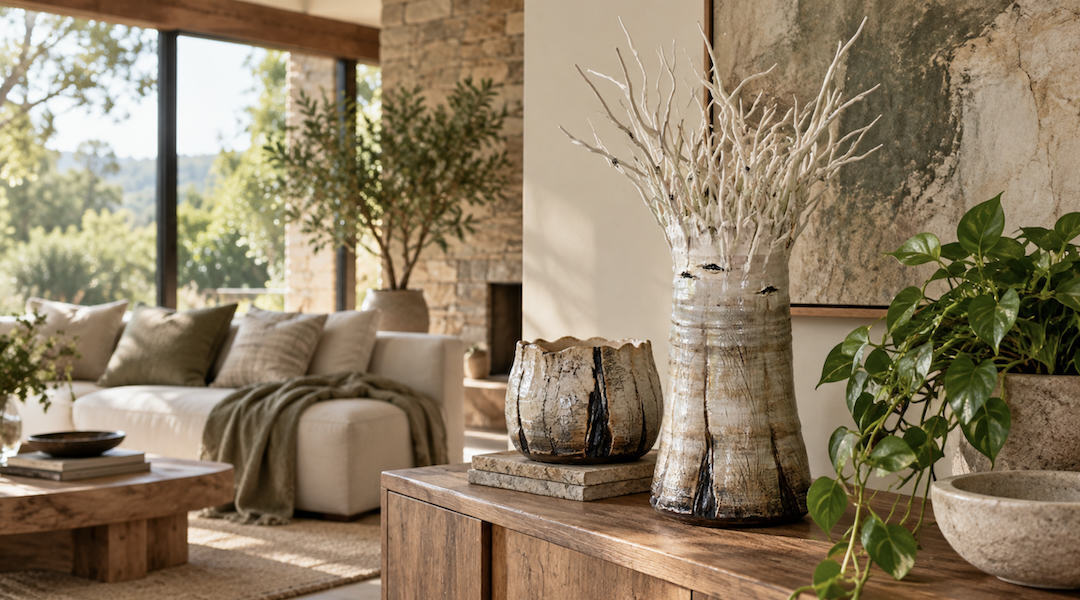
Biophilic Interior Design with Sculptural Ceramics
Biophilic Interior Design with Sculptural Ceramics: Bringing Nature into the Home
There is a quality I notice immediately in spaces that hold a meaningful connection with nature. Natural light moves across tactile surfaces, materials reveal where they have come from, and objects seem to have enough space around them to breathe. I often experience these interiors as calming because they remind the senses of landscapes beyond the walls.
This is one of the reasons I am interested in biophilic interior design with sculptural ceramics. Clay begins in the earth, carries mineral history within it and retains the physical memory of making. When transformed into a ceramic vessel, it offers a way of bringing something of the landscape into the home.
My own nature-inspired ceramics grow from this relationship. Trees, woodland floors, wild clay, bark, stone and changing landscapes influence the forms and surfaces I create. Each vessel becomes a small point of connection between an interior space and the natural environments that inspired it.
What is biophilic interior design?
Biophilic design is based on our human affinity with nature and living systems. The term draws upon E.O. Wilson’s concept of biophilia, which proposed that our long evolutionary relationship with the natural world has left us with a deep tendency to seek connection with it.
Within interior design, this connection can be supported through plants, daylight, views of nature, natural materials, organic textures and forms that reflect patterns found in the living world. Research increasingly supports the value of these experiences. A meta-analysis involving 49 experimental studies found that exposure to natural environments was associated with increased positive emotion and reduced negative emotion. Contemporary research into biophilic architecture also highlights material authenticity, natural forms and multisensory experiences as important elements within nature-connected spaces.
For me, biophilic design begins with how a space feels to inhabit.
How can sculptural ceramics support biophilic interior design?
Clay carries a direct material relationship with the earth. Its colour, weight and texture provide a sensory reminder of the physical landscape, particularly when the finished ceramic retains some of its natural character.
This makes sculptural ceramics for interiors particularly interesting within biophilic design. A handmade vessel can introduce organic form and tactile texture into a room, creating a visual resting point that feels connected to nature.
My Tree Vessels, Earth Vessels and Landscape Vessels each explore this in different ways. Surfaces may reference bark, geological layers or the movement of landscape. Their forms emerge through a combination of observation, remembering and the clay’s own response during making. I am interested in allowing the material to remain visible within this process.
“Clay carries something of the landscape within it. When I bring that material into form, I feel I am creating a small bridge between the natural world and the spaces in which we live.”
The role of texture and form in ceramic styling
Texture changes the way we experience an interior because it invites the senses beyond sight. A rough surface, an irregular edge or the trace of a maker’s hand encourages closer attention.
This is particularly relevant when choosing statement ceramics for luxury interiors. Luxury can be expressed through material integrity, craftsmanship and individuality. A handmade sculptural vessel carries evidence of time and human touch, creating an object with its own presence within the wider design.
Organic ceramic forms can also sit comfortably alongside timber, stone, linen, wool and other natural materials. These relationships allow different textures to speak quietly to one another across a room.
For interior designers considering how to specify handmade ceramics in interior projects, I feel scale and surrounding space are important. A larger vessel may provide an anchor within an open-plan interior. A smaller sculptural work may introduce a moment of intimacy on a console, shelf or plinth.
The piece needs enough room for its form to be experienced.
Can ceramic art improve our connection with nature indoors?
This question sits very close to my own fine art research. During my Master’s in Fine Art Ceramics, I explored whether ceramic vessels could become activators for wellbeing.
I remain careful about what this means. A ceramic vessel is not a therapeutic intervention, and current research does not demonstrate that placing ceramic art in a room directly improves health. There is stronger evidence for the broader relationship between nature exposure, biophilic environments and wellbeing.
My interest lies within that wider landscape.
If an object reminds us of earth, trees, woodland or natural processes, it may help maintain an emotional and sensory connection with those environments. If its texture invites us to pause or touch, it may bring our attention briefly into the present moment.
For me, this is where nature-inspired ceramic art becomes meaningful. The vessel carries a relationship with nature into daily life.
How interior designers use ceramic art in spaces
Ceramic sculptures can fulfil several roles within an interior. They can create a focal point, establish visual rhythm, introduce texture or connect different natural materials within a scheme.
Ceramic sculptures for interior designers can also be commissioned in response to a particular setting. Through bespoke ceramic commissions, scale, surface, colour and form can be considered alongside architecture, lighting and the emotional intention of a room.
This process is particularly valuable when a designer is seeking an artwork with a strong sense of place. A bespoke vessel can respond to a landscape meaningful to the client, the natural setting around a property, or the textures already present within the interior. The resulting piece becomes part of the story of the space.
Living with nature-inspired ceramics
I think the most meaningful interiors develop gradually through the things we choose to live with. A ceramic vessel changes throughout the day as light moves across its surface. Its shadows deepen towards evening. Textures become more visible in low sunlight. Over time, its presence becomes familiar.
This ongoing relationship is important to me.
My hope is that the sculptural ceramic vessels I create offer a quiet connection with nature within the home, allowing something of earth, landscape and handmade process to remain present within everyday life.
You are invited to explore my Collections, including Tree Vessels, Earth Vessels and Landscape Vessels, and notice which forms feel naturally connected to the spaces you inhabit.
Interior designers, collectors and clients interested in bespoke ceramic commissions are also warmly invited to visit the Contact page to begin a conversation.
Perhaps the simplest place to begin is to look around your own home and notice the materials that make you feel most settled. Which surfaces, forms and objects seem to bring you closer to the natural world?
References
Gaekwad, J.S., Sal Moslehian, A., Roös, P.B. and Walker, A. (2022) ‘A meta-analysis of emotional evidence for the biophilia hypothesis and implications for biophilic design’, Frontiers in Psychology, 13, 750245.
Kellert, S.R. and Calabrese, E.F. (2015) The Practice of Biophilic Design. London: Terrapin Bright Green.
Pallasmaa, J. (2012) The Eyes of the Skin: Architecture and the Senses. Chichester: Wiley.
Usip, E., Essien, E. and Ema, I. (2026) ‘A review of biophilic architectural design strategies and their effects on human wellbeing in contemporary built environments’, Discover Environment, 4, article 170.
Wilson, E.O. (1984) Biophilia. Cambridge, MA: Harvard University Press.


