


Clay Attunement
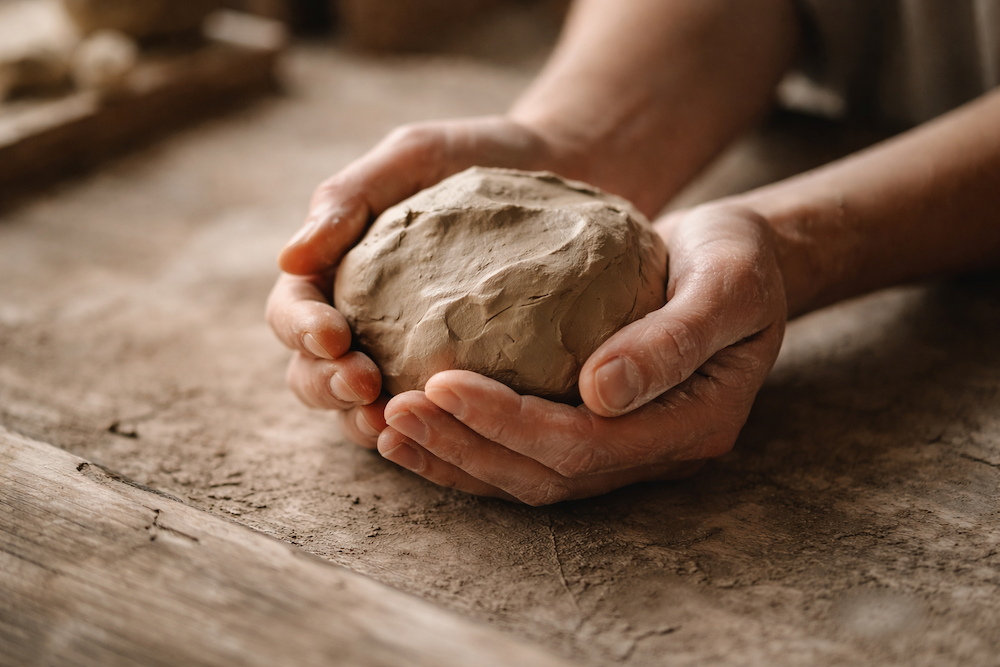
Clay attunement is a quiet practice of listening. It is less about shaping a material and more about allowing a relationship to form between hands, breath and earth. When I work with clay, I am not asking it to become something. I am paying attention to what it already holds and how it responds when met with patience and care.
Clay is a living archive. It carries memory of geology, water, pressure and time. When it is rehydrated and placed in the hands, it does not arrive neutral. It arrives with history. Attunement begins when I slow down enough to sense that history rather than override it with intention.
In the studio, this means working without urgency. I notice the temperature of the clay, how quickly it yields, where it resists and where it softens. These responses guide my movements. Clay teaches through feedback, and attunement grows when I allow myself to be guided rather than to direct.
What does it mean to attune to clay?
Attunement is a process of regulation and alignment. In therapeutic language, it describes the ability to sense and respond to another being’s state. With clay, this process is tactile and immediate. My hands become receptors. Breath slows naturally. Attention drops from the head into the body.
This embodied listening mirrors experiences found in nature. Just as walking through woodland encourages a quieter pace and heightened awareness, working with clay invites presence through touch. There is no requirement to analyse or evaluate. The clay responds honestly, and that honesty becomes a grounding force.
Over time, I have noticed that when I am regulated, the clay behaves differently. It feels more cooperative, more responsive. When I am distracted or holding tension, the clay reflects that too. Attunement therefore becomes reciprocal. It is not only about sensing the clay, but about becoming aware of my own internal state.
Clay as a bridge between body and earth
Clay sits at an intersection between the human body and the natural world. It is soft, receptive and responsive, yet it also carries immense strength once fired. This duality mirrors aspects of human resilience. Through attunement, clay offers a way to explore softness without fragility and strength without rigidity.
Working with clay activates the parasympathetic nervous system through repetitive, rhythmic movement and sustained touch. Research into tactile engagement shows that hand based activities can support emotional regulation and reduce stress responses. While clay work is not therapy in itself, it often creates therapeutic conditions through presence, repetition and sensory grounding.
In my own practice, I notice that time spent with clay often leaves me feeling steadier and more spacious. Problems that felt sharp soften at the edges. Thoughts slow. The body feels held. This is not something I consciously aim for, but something that emerges through attuned engagement.
How does attunement influence form?
When I allow clay to guide form rather than impose design, the resulting vessels carry a different quality. Curves emerge organically. Surfaces retain subtle irregularities that reflect touch rather than perfection. These marks are not flaws. They are records of relationship.
Attuned forms tend to feel calm in the hand and balanced in space. They invite interaction rather than observation alone. When a vessel is shaped through attunement, it often communicates stability and quiet presence without needing explanation.
I am increasingly interested in how these qualities translate into the home. A vessel shaped through attentive listening holds more than function. It holds process. It carries the rhythm of making and the steadiness of clay met with care.
Clay attunement beyond the studio
Attunement does not end when the clay leaves my hands. When a vessel enters someone’s home, a new relationship begins. The weight, texture and form continue to communicate through daily interaction. Holding a cup, placing flowers, resting a hand on a rim. These small moments invite the body back into awareness.
In a world that often prioritises speed and abstraction, clay offers something slower and more grounded. It invites touch. It responds to light. It ages gently. Attuned vessels can act as anchors within domestic spaces, reminding the body of earth based rhythms and the value of presence.
For those who are sensitive to their environments, these subtle cues matter. Materials shape how we feel, often without conscious recognition. Clay, when worked with attentiveness, can support a sense of calm simply through being encountered.
Listening as a creative and healing practice
Clay attunement has taught me that listening is an active process. It requires patience, humility and willingness to respond rather than control. These qualities are as relevant to human relationships as they are to making.
When I am fully present with clay, I feel connected not only to the material but to wider cycles of nature. The clay reminds me that transformation happens through time, heat and trust in process. There is reassurance in this. It mirrors how healing often unfolds slowly and through gentle consistency rather than force.
For those drawn to this way of working, my vessels are created as invitations to experience clay attunement beyond the studio. Each piece is shaped slowly, allowing the material to guide form and surface. You can explore my ceramic collections on my website and see how these vessels may support a quieter, more connected relationship with your own spaces.
As you encounter clay in your life, whether through making or use, you might reflect on how it feels to meet a material that responds honestly to your touch. What changes when you allow yourself to listen rather than lead?
References
Pallasmaa, J. (2012) The Eyes of the Skin: Architecture and the Senses. Chichester: Wiley.
Malchiodi, C.A. (2015) Creative Arts and Play Therapy for Attachment Problems. New York: Guilford Press.
Field, T. (2010) ‘Touch for socioemotional and physical well being: A review’, Developmental Review, 30(4), pp. 367–383.
Ingold, T. (2011) Being Alive: Essays on Movement, Knowledge and Description. London: Routledge.


