


Clay, Trees and the Art of Listening to What Lifts You
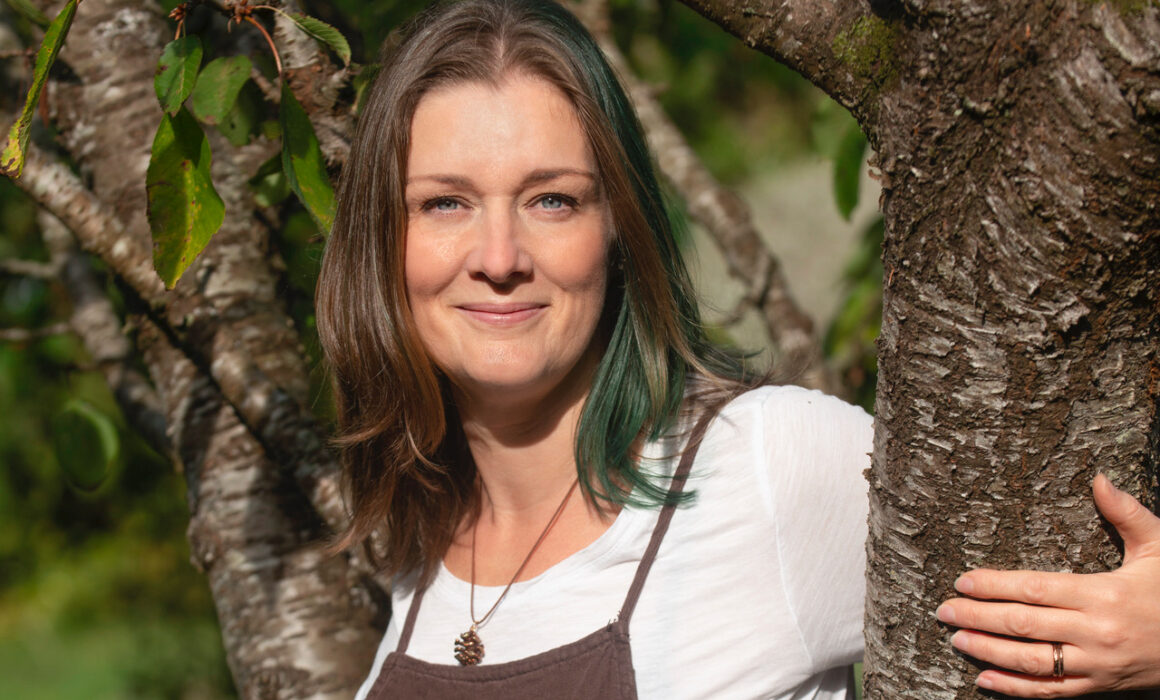
Recording the recent episode of An Art To It was an invitation to articulate what has shaped my creative life and my practice as both a maker and someone who cares deeply about human wellbeing in relation to the natural world. I spoke with Elaine Dye about the threads that have woven together my journey, from early encounters with art to the quiet listening that unfolds when I work with clay or walk among trees.
The An Art To It podcast explores the point at which passion becomes profession, and what it means to live creatively and sustainably as an artist. In our conversation, I shared how creativity has been present since childhood, nurtured through formative experiences with colour, texture and making, and how these early influences continue to shape how I work today.
At the heart of our discussion was the blending of two worlds: ceramics as a material practice and nature as a ground for wellbeing. I described how clay is not just a medium but a site of attunement, a way for me to engage the body, senses and awareness in a slow, intentional focus that mirrors the calm of walking in woodland or beside water. Making in this way has taught me that my studio practice is not separate from lived experience, but a continuation of the same sensibilities that draw me toward forests, earth, stone and breath.
Why making is about listening, not forcing
In the interview, I reflected on how being in nature has shaped my understanding of creative practice. Trees, soil and clay all communicate in their own ways. They offer feedback rather than resistance. When I find myself out of rhythm — scattered or ungrounded — working with clay in the studio sometimes helps bring coherence, but other times the forest does this work more efficiently. Walking slowly among trees reduces the incessant chatter of the mind, and subtle rhythms of breath and step begin to anchor the body again. This is not a metaphor. It is an experiential truth that many people recognise when they spend extended time in calm natural settings.
Within forest environments, there are measurable effects on human physiology. Time spent among trees has been associated with reductions in stress hormones, lowered blood pressure and shifts in brainwave patterns towards calmer states. These effects are part of the larger phenomenon often described as forest bathing — a practice rooted in Japanese shinrin-yoku that emphasises sensory immersion in nature. Whilst we spoke from lived experience rather than academic exposition, the science supports what many people intuit: being in nature regulates the nervous system and invites the body back into presence.
Working with clay is similar in its effect because it calls for attention to be present in the moment. Whilst forming clay, one is naturally drawn into sensory engagement — touch, temperature, pressure, rhythm — all of which quiet the mind and encourage a bodily awareness that feels akin to walking on a forest floor.
Reflections on imposter syndrome and creativity
Another part of the conversation touched on creative identity. Many makers carry echoes of self-doubt long after they have mastered technique or process. In the interview, I shared how feelings of uncertainty are less a barrier to creativity and more a familiar companion on a long journey. Imposter syndrome does not disappear; it becomes a measure by which I have had to learn to trust curiosity instead of striving for certainty.
This is a theme that resonates with many listeners because so much of art is about showing up even when the interior critic is loudest. Creative work, whether in clay or in any other material form, asks for patience with process. It invites the maker to stay with confusion long enough to hear something new emerge.
Beyond the studio: materials, meaning and mind
A significant part of our talk was about materials and meaning. My vessels are shaped slowly, in relation to the environment where they originate and the landscape that inspires them. Clay is porous. It carries traces of place — sediment, moisture, temperature — even before it is shaped. In my research practice I have explored how materials can act as conduits for nature’s voice, and how the act of shaping clay can reflect a deeper dialogue between maker and matter.
This perspective shifts the role of ceramics from object to relationship. A vessel is not merely functional or decorative. It is an intersection of place, time and intention.
What I hope listeners take from the conversation
When I reflect on why I enjoy speaking about this work, it is because it invites others to notice how making and nature are intertwined with wellbeing. Creativity is not a luxury reserved for studio spaces only; it is a way of seeing, sensing and responding. Nature supports this way of being because it arises from the same fundamental processes — pattern, rhythm, adaptation, resonance.
For those who feel called to explore this further, whether through making with clay, walking among trees, or simply pausing to breathe more fully, my ceramic collections offer a quiet extension of this conversation within the home.
These vessels are shaped with intention and care, and each carries an invitation to slow down, notice and connect. You can explore the full range on my website and discover pieces that resonate with your own journey of creative presence and connection.
Sharing my journey to ‘An Art To It’ was a generous experience because it allowed space for vulnerability, reflection and honesty about what it means to live creatively. I hope that the words and ideas shared continue to invite listeners into their own reflective practice.
References
Wilson, E.O. (1984) Biophilia. Cambridge, MA: Harvard University Press.
Li, Q. (2018) Shinrin-Yoku: The Art and Science of Forest Bathing. London: Penguin Random House.
Bratman, G.N., Daily, G.C., Levy, B.J. and Gross, J.J. (2015) ‘The benefits of nature experience: Improved affect and cognition’, Landscape and Urban Planning, 138, pp. 41-50.


