
Sculptural Ceramics for Collectors: Choosing Work with Presence, Meaning and Lasting Connection
Collecting sculptural ceramics is often a quiet and personal act. It begins with recognition. A form, surface or texture seems to speak before the mind has fully understood why. The piece may carry a sense of stillness, movement, earth or memory. It may feel as though it already belongs somewhere within the home, waiting to be encountered slowly over time.
For collectors, sculptural ceramics offer something distinct within contemporary art. They hold the trace of the hand, the intelligence of material and the presence of form. Unlike objects made through mechanical repetition, handmade ceramic pieces carry the subtle evidence of touch, pressure, decision and response. This is part of their value.
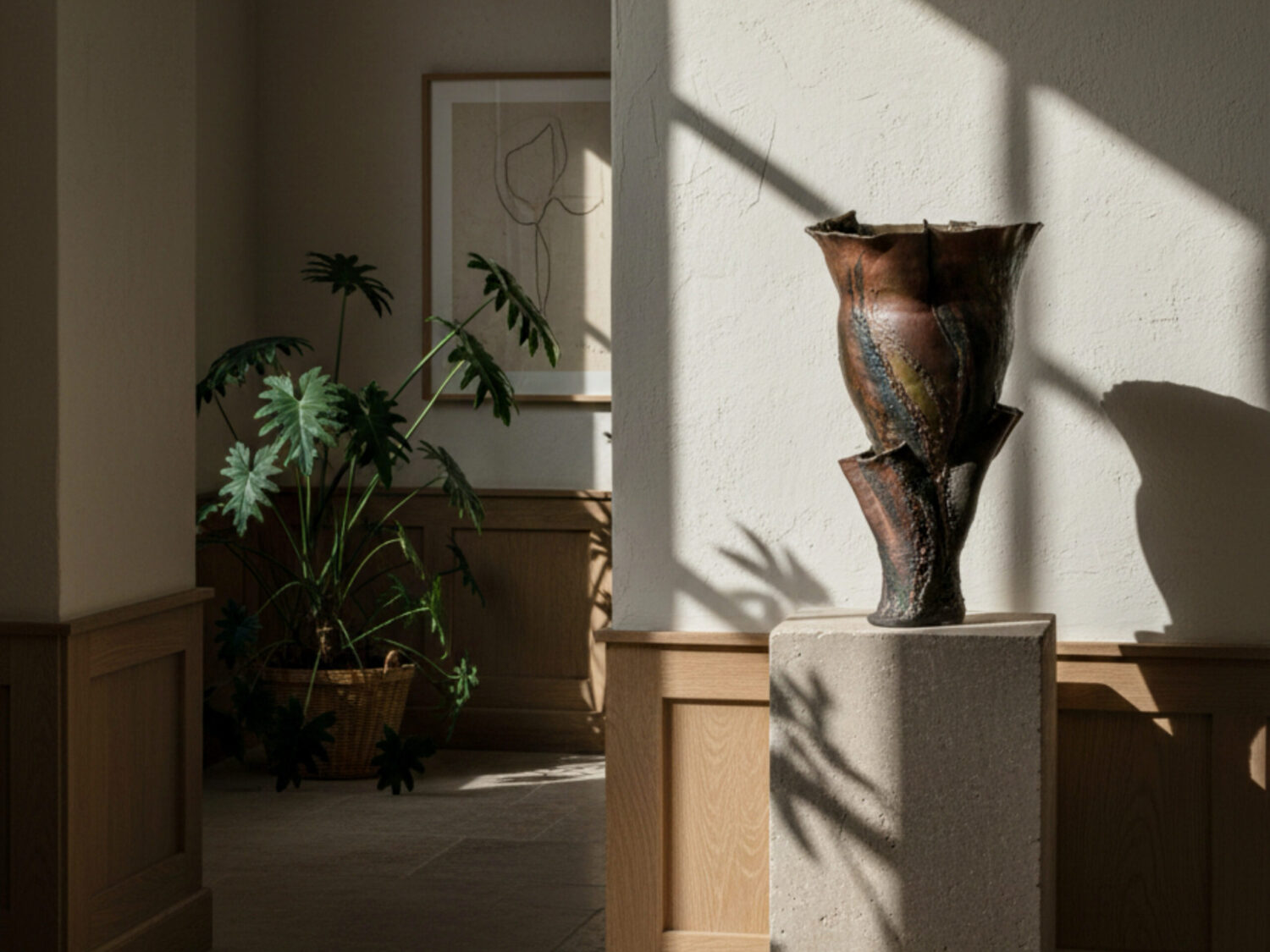
In my own practice, I am drawn to the vessel because it holds possibility. A vessel may be functional, sculptural or contemplative. It may hold flowers, light, shadow, silence or memory. It is a form that invites relationship, which is why sculptural ceramics for collectors can become meaningful far beyond their visual presence.
Why do collectors choose sculptural ceramics?
Collectors often choose ceramic work because it offers both material depth and emotional resonance. Clay is ancient and immediate. It comes from the earth, responds directly to the hand and is transformed through fire into something lasting.
This transformation gives ceramics a particular power. A vessel begins as soft, responsive material, then becomes permanent through heat. It carries the vulnerability of making and the strength of survival. For many collectors, this combination of delicacy and endurance is deeply compelling.
Sculptural ceramics also sit beautifully between fine art, craft and design. They can be displayed in a gallery, placed within an interior or lived with in a domestic space. This flexibility does not lessen their artistic value. It gives them intimacy.
A painting is usually viewed from a distance. A ceramic vessel can be viewed, circled, held, placed and lived alongside. It changes through light, season and mood. It becomes part of the atmosphere of a space.
What makes ceramic art collectable?
Collectable ceramic artists are often recognised for a clear relationship between material, process and meaning. The strongest work is not simply well made. It carries a distinct voice.
For collectors seeking contemporary ceramic artists in the UK, this voice may be found in how an artist handles form, surface, scale and concept. It may be present in a repeated motif, a particular relationship with landscape, or a commitment to material research. It may also appear in the quiet consistency of a body of work over time.
In my own work, nature is not used as decoration. It is part of the making process. Trees, forest floors, wild clay, seasonal light and organic surface responses all influence the final vessel. Each piece is shaped through observation, memory and touch, allowing clay to act as a bridge between human experience and the natural world.
This is important for collectors because a ceramic piece gains depth when it is connected to an authentic practice. The object is not isolated from its maker. It carries the research, sensitivity and intention behind it.
Bespoke ceramic sculpture commissions for collectors
A bespoke ceramic sculpture commission allows a collector to become part of the creative process in a more personal way. Rather than choosing only from available work, a commission opens a conversation around place, scale, atmosphere and intention.
This might involve a vessel created for a particular room, a made to order ceramic piece for a meaningful setting, or a site-specific ceramic installation that responds to the architecture and emotional tone of a space.
Commissioned ceramic artwork in the UK is increasingly valued by collectors who want work that feels personal without being decorative in a superficial way. A bespoke piece can respond to a collector’s connection with nature, memory, place or material. It can also be shaped with sensitivity to the light, colours and textures of the space where it will live.
For me, a commission begins with listening. I want to understand not only where the piece will be placed, but what kind of presence it needs to hold. Some pieces call for quiet grounding. Others ask for more movement, height or texture. The clay itself also contributes to this conversation, guiding what is possible and what feels true.
How do ceramic vessels live within a collection?
A sculptural ceramic vessel can sit alone as a focal piece, or it can become part of a wider collection of contemporary clay art, paintings, textiles, glass or natural materials. Its role depends on scale, surface, form and placement.
Some collectors are drawn to larger vessels because they create a strong point of stillness within a room. Others prefer smaller works that invite closer attention. In both cases, the ceramic piece offers a tactile presence that can soften and deepen an interior.
Custom ceramic vases for interiors may be chosen for floral use, although many sculptural vessels are appreciated without needing to contain anything visible. Their inner space is part of their meaning. An empty vessel can still feel full, holding light, shadow, breath and attention.
This is one reason ceramic vessels are so suited to collectors who value contemplative objects. They do not need to perform. They can simply be present.
Why handmade ceramics feel different
Handmade ceramics carry irregularities that are not flaws. They are records of life within the making process. A slight variation in curve, a textured surface, a mark left by the hand or a shift in glaze can all reveal the relationship between maker and material.
Research into sensory experience and material culture suggests that touch, texture and natural materials influence how people experience spaces and objects. Clay invites a slower kind of looking because it is both visual and tactile. Even when we do not touch a piece, we often sense its surface through the eye.
This matters in a world where many interiors are increasingly smooth, digital and uniform. Sculptural ceramics bring back a sense of earth, hand and presence. They remind us that objects can carry time.
For collectors, this is part of the emotional value of living with ceramic art. The work is not only collected. It is encountered.
Luxury bespoke ceramics in the UK
There is growing interest in luxury bespoke ceramics in the UK, particularly among collectors seeking work that feels original, grounded and connected to a recognisable artistic practice. This interest reflects a wider shift towards pieces that hold meaning rather than simply completing a scheme.
Luxury, in this context, is not about excess. It is about care, rarity, material integrity and depth of making. A handmade ceramic vessel may take weeks or months to complete, moving through stages of forming, drying, refining, firing and finishing. At each stage, the piece can change. The artist must respond.
This slow process is part of what collectors value. The final vessel holds the time of its making. It also holds the uncertainty of transformation, because clay and fire always retain an element of independence.
“My vessels are shaped through listening. I want each piece to hold a quiet relationship between clay, nature and the person who chooses to live with it.”
How to choose sculptural ceramics for your collection
Choosing sculptural ceramics for collectors is partly about knowledge and partly about feeling. It can be helpful to consider the artist’s practice, training, exhibition history and conceptual focus. It is also important to notice how the work affects you physically.
Does the piece invite you closer? Does it bring a sense of calm, curiosity or recognition? Can you imagine living with it over time? Does it continue to reveal something when you return to it?
For collectors, these questions matter because ceramic work is often experienced intimately. It becomes part of daily surroundings, seen in morning light, evening shadow and quiet passing moments.
A strong ceramic piece does not need to dominate a space. It may simply alter the feeling of the room by being there.
An invitation to collect with connection
Sculptural ceramics offer collectors a way to bring material presence, nature connection and artistic meaning into the spaces they inhabit. Each vessel holds the memory of clay, hand, fire and intention. Each becomes a meeting point between the natural world and human experience.
For those seeking a bespoke ceramic sculpture commission, commissioned ceramic artwork in the UK, or made to order ceramic pieces with a quiet and grounded presence, the process begins with noticing what resonates.
You are invited to explore the Collections and spend time with the vessels that call your attention. If a piece feels right, or if you would like to begin a conversation about a commission, the Contact page offers a simple way to enquire.
As you reflect on the ceramic work you are drawn to, you might ask what the piece seems to hold for you. Is it beauty, stillness, memory, nature, or a sense of returning to something deeply familiar?
References
Adamson, G. (2013) The Invention of Craft. London: Bloomsbury.
Dormer, P. (1997) The Culture of Craft. Manchester: Manchester University Press.
Ingold, T. (2013) Making: Anthropology, Archaeology, Art and Architecture. London: Routledge.
Pallasmaa, J. (2012) The Eyes of the Skin: Architecture and the Senses. Chichester: Wiley.
Risatti, H. (2007) A Theory of Craft: Function and Aesthetic Expression. Chapel Hill: University of North Carolina Press.
Victoria and Albert Museum (2026) Ceramics. London: Victoria and Albert Museum.