


Tree Wisdom
Tree Wisdom: Finding Your Strength and Inner Glow During Winter
Winter has a way of asking us to slow down and look more carefully at how we sustain ourselves. The light is lower, the days are shorter and energy can feel harder to access, both physically and emotionally. During this season, I often find myself turning to trees for guidance, not in a symbolic sense alone, but through direct, embodied experience.
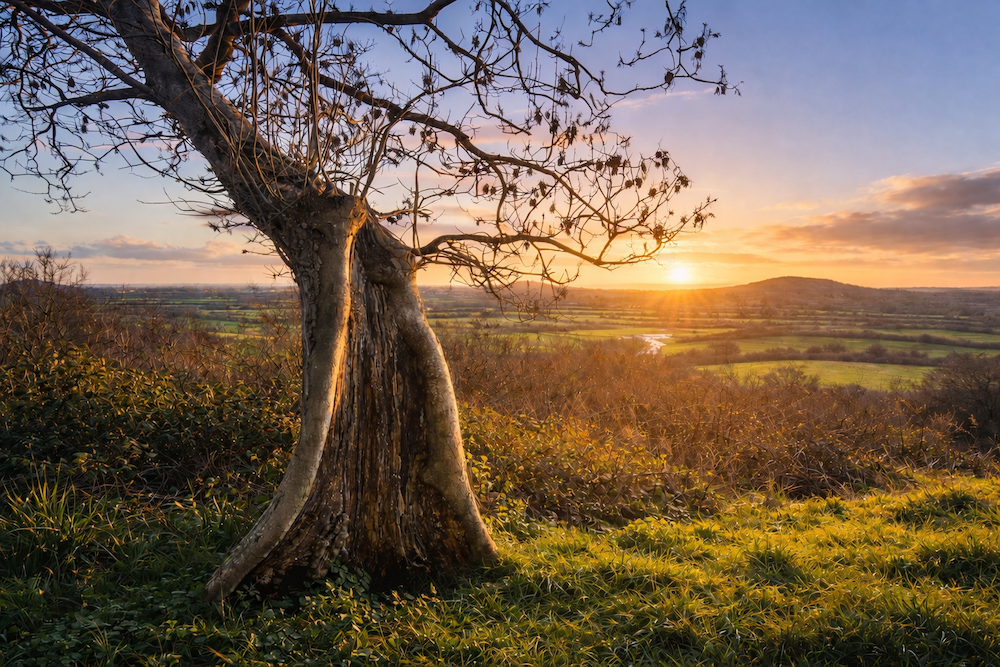
On a recent winter afternoon, between seeing Reiki clients, I took my usual loop walk behind our house, over Hellenge Nature Reserve. This path has become a familiar rhythm in my life, a way of checking in with my body and mind. Along this route stands an ash tree that has quietly become a companion to me. She is known locally as the half ash tree, having lost a significant portion of her form, yet she continues to stand, rooted and alive, against all odds.
Each time I pass her, I feel compelled to stop. I place my hand on her trunk because walking past without acknowledging her feels unthinkable. There is something deeply grounding in this small act of contact. Her presence reminds me that resilience does not require wholeness in the way we often imagine it. Strength can exist alongside loss, adaptation and visible change.
Ash trees have long been associated with endurance and connection. In ecological terms, they are keystone species, supporting a wide range of insects, birds and fungi. Their deep root systems anchor them firmly, while their flexible structure allows them to respond to wind and weather without rigidity. Even when damaged, ash trees often continue to grow, redirecting energy where it is most needed.
The half ash tree embodies this quality. She has not given up. Instead, she has adjusted. Her remaining branches lean gently towards the sun, orientating themselves to receive as much light as possible. This is not a struggle, but a quiet, intelligent response to circumstance.
The sun is the primary source of energy for all life on this planet. Through photosynthesis, trees convert sunlight into nourishment, sustaining themselves and the ecosystems around them. Humans, too, are deeply influenced by solar rhythms. Exposure to natural light supports circadian regulation, vitamin D synthesis and mood balance. In winter, when sunlight is scarce, our bodies can feel the absence acutely.
Standing with the ash tree, I noticed how instinctively she turns towards the light, even in the low winter sun. Watching this reminded me that we are allowed to do the same. We can choose to seek light where it is available, whether that is through stepping outside at sunset, allowing sunlight to touch our skin, or simply orientating ourselves towards warmth and openness rather than withdrawal.
In Reiki practice, the sun is often experienced as a source of life force energy. Allowing sunlight to rest on the body, even briefly, can feel replenishing at a subtle level. I often pause during winter walks to face the sun, close my eyes and breathe, imagining that warmth gently charging my system. This is not about forcing positivity, but about receiving what is freely offered.
The ash tree teaches me that resilience does not mean standing unchanged. It means staying present, remaining rooted and continuing to reach towards what sustains us. When life throws its curveballs and energy feels depleted, we can still stand tall in our own way, supported by what remains strong within us.
In my ceramic practice, these reflections find their way into form. Working with clay during winter feels particularly resonant. Clay responds to patience and warmth, much like the body does at this time of year. Vessels shaped with these qualities in mind become quiet reminders of endurance and light, holding space for reflection within the home.
As the sun lowers during winter afternoons, casting long shadows and a softer glow, I am reminded that light does not disappear simply because it changes its angle. It continues to nourish, even when it feels distant. The half ash tree stands as living proof of this truth.
As you move through winter, you might pause to notice how you respond to light. Where do you instinctively turn for warmth, nourishment or reassurance? And like the ash tree, how might you allow yourself to receive what the sun still offers, even in its quieter season?


