Tree Wisdom

Tree Wisdom: Finding Your Strength and Inner Glow During Winter

Winter has a way of asking us to slow down and look more carefully at how we sustain ourselves. The light is lower, the days are shorter and energy can feel harder to access, both physically and emotionally. During this season, I often find myself turning to trees for guidance, not in a symbolic sense alone, but through direct, embodied experience.

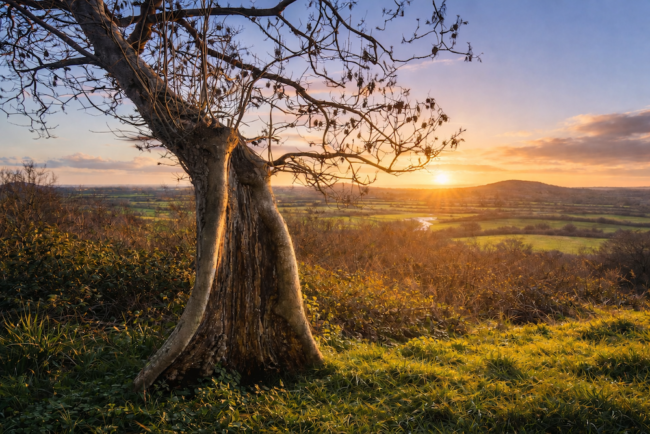
On a recent winter afternoon, between seeing Reiki clients, I took my usual loop walk behind our house, over Hellenge Nature Reserve. This path has become a familiar rhythm in my life, a way of checking in with my body and mind. Along this route stands an ash tree that has quietly become a companion to me. She is known locally as the half ash tree, having lost a significant portion of her form, yet she continues to stand, rooted and alive, against all odds.

Each time I pass her, I feel compelled to stop. I place my hand on her trunk because walking past without acknowledging her feels unthinkable. There is something deeply grounding in this small act of contact. Her presence reminds me that resilience does not require wholeness in the way we often imagine it. Strength can exist alongside loss, adaptation and visible change.

Ash trees have long been associated with endurance and connection. In ecological terms, they are keystone species, supporting a wide range of insects, birds and fungi. Their deep root systems anchor them firmly, while their flexible structure allows them to respond to wind and weather without rigidity. Even when damaged, ash trees often continue to grow, redirecting energy where it is most needed.

The half ash tree embodies this quality. She has not given up. Instead, she has adjusted. Her remaining branches lean gently towards the sun, orientating themselves to receive as much light as possible. This is not a struggle, but a quiet, intelligent response to circumstance.

The sun is the primary source of energy for all life on this planet. Through photosynthesis, trees convert sunlight into nourishment, sustaining themselves and the ecosystems around them. Humans, too, are deeply influenced by solar rhythms. Exposure to natural light supports circadian regulation, vitamin D synthesis and mood balance. In winter, when sunlight is scarce, our bodies can feel the absence acutely.

Standing with the ash tree, I noticed how instinctively she turns towards the light, even in the low winter sun. Watching this reminded me that we are allowed to do the same. We can choose to seek light where it is available, whether that is through stepping outside at sunset, allowing sunlight to touch our skin, or simply orientating ourselves towards warmth and openness rather than withdrawal.

In Reiki practice, the sun is often experienced as a source of life force energy. Allowing sunlight to rest on the body, even briefly, can feel replenishing at a subtle level. I often pause during winter walks to face the sun, close my eyes and breathe, imagining that warmth gently charging my system. This is not about forcing positivity, but about receiving what is freely offered.

The ash tree teaches me that resilience does not mean standing unchanged. It means staying present, remaining rooted and continuing to reach towards what sustains us. When life throws its curveballs and energy feels depleted, we can still stand tall in our own way, supported by what remains strong within us.

In my ceramic practice, these reflections find their way into form. Working with clay during winter feels particularly resonant. Clay responds to patience and warmth, much like the body does at this time of year. Vessels shaped with these qualities in mind become quiet reminders of endurance and light, holding space for reflection within the home.

As the sun lowers during winter afternoons, casting long shadows and a softer glow, I am reminded that light does not disappear simply because it changes its angle. It continues to nourish, even when it feels distant. The half ash tree stands as living proof of this truth.

As you move through winter, you might pause to notice how you respond to light. Where do you instinctively turn for warmth, nourishment or reassurance? And like the ash tree, how might you allow yourself to receive what the sun still offers, even in its quieter season?
Clay, Trees and the Art of Listening to What Lifts You

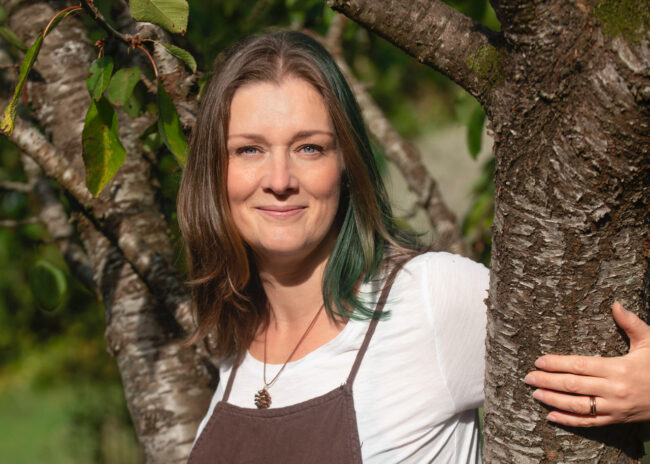
Recording the recent episode of An Art To It was an invitation to articulate what has shaped my creative life and my practice as both a maker and someone who cares deeply about human wellbeing in relation to the natural world. I spoke with Elaine Dye about the threads that have woven together my journey, from early encounters with art to the quiet listening that unfolds when I work with clay or walk among trees.

The An Art To It podcast explores the point at which passion becomes profession, and what it means to live creatively and sustainably as an artist. In our conversation, I shared how creativity has been present since childhood, nurtured through formative experiences with colour, texture and making, and how these early influences continue to shape how I work today.

At the heart of our discussion was the blending of two worlds: ceramics as a material practice and nature as a ground for wellbeing. I described how clay is not just a medium but a site of attunement, a way for me to engage the body, senses and awareness in a slow, intentional focus that mirrors the calm of walking in woodland or beside water. Making in this way has taught me that my studio practice is not separate from lived experience, but a continuation of the same sensibilities that draw me toward forests, earth, stone and breath.

Why making is about listening, not forcing

In the interview, I reflected on how being in nature has shaped my understanding of creative practice. Trees, soil and clay all communicate in their own ways. They offer feedback rather than resistance. When I find myself out of rhythm — scattered or ungrounded — working with clay in the studio sometimes helps bring coherence, but other times the forest does this work more efficiently. Walking slowly among trees reduces the incessant chatter of the mind, and subtle rhythms of breath and step begin to anchor the body again. This is not a metaphor. It is an experiential truth that many people recognise when they spend extended time in calm natural settings.

Within forest environments, there are measurable effects on human physiology. Time spent among trees has been associated with reductions in stress hormones, lowered blood pressure and shifts in brainwave patterns towards calmer states. These effects are part of the larger phenomenon often described as forest bathing — a practice rooted in Japanese shinrin-yoku that emphasises sensory immersion in nature. Whilst we spoke from lived experience rather than academic exposition, the science supports what many people intuit: being in nature regulates the nervous system and invites the body back into presence.

Drawing clay is similar in its effect because it calls for attention to be present in the moment. Whilst working with clay, one is naturally drawn into sensory engagement — touch, temperature, pressure, rhythm — all of which quiet the mind and encourage a bodily awareness that feels akin to walking on a forest floor.

Reflections on imposter syndrome and creative identity
Another part of the conversation touched on creative identity. Many makers carry echoes of self-doubt long after they have mastered technique or process. In the interview, I shared how feelings of uncertainty are less a barrier to creativity and more a familiar companion on a long journey. Imposter syndrome does not disappear; it becomes a measure by which I have had to learn to trust curiosity instead of striving for certainty.

This is a theme that resonates with many listeners because so much of art is about showing up even when the interior critic is loudest. Creative work, whether in clay or in any other material form, asks for patience with process. It invites the maker to stay with confusion long enough to hear something new emerge.

Beyond the studio: materials, meaning and mind

A significant part of our talk was about materials and meaning. My vessels are shaped slowly, in relation to the environment where they originate and the landscape that inspires them. Clay is porous. It carries traces of place — sediment, moisture, temperature — even before it is shaped. In my research practice I have explored how materials can act as conduits for nature’s voice, and how the act of shaping clay can reflect a deeper dialogue between maker and matter.

This perspective shifts the role of ceramics from object to relationship. A vessel is not merely functional or decorative. It is an intersection of place, time and intention.

What I hope listeners take from the conversation

When I reflect on why I enjoy speaking about this work, it is because it invites others to notice how making and nature are intertwined with wellbeing. Creativity is not a luxury reserved for studio spaces only; it is a way of seeing, sensing and responding. Nature supports this way of being because it arises from the same fundamental processes — pattern, rhythm, adaptation, resonance.

For those who feel called to explore this further, whether through making with clay, walking among trees, or simply pausing to breathe more fully, my ceramic collections offer a quiet extension of this conversation within the home.

These vessels are shaped with intention and care, and each carries an invitation to slow down, notice and connect. You can explore the full range on my website and discover pieces that resonate with your own journey of creative presence and connection.

Listening to An Art To It was a generous experience because it allowed space for vulnerability, reflection and honesty about what it means to live creatively. I hope that the words and ideas shared continue to invite listeners into their own reflective practice.

References

Wilson, E.O. (1984) Biophilia. Cambridge, MA: Harvard University Press.

Li, Q. (2018) Shinrin-Yoku: The Art and Science of Forest Bathing. London: Penguin Random House.

Bratman, G.N., Daily, G.C., Levy, B.J. and Gross, J.J. (2015) ‘The benefits of nature experience: Improved affect and cognition’, Landscape and Urban Planning, 138, pp. 41-50.

How trees communicate and what they teach us about connection

Trees are often perceived as silent presences, steady and still within the landscape. Yet science now confirms what many people have long sensed intuitively. Trees are in constant communication, sharing information, resources and warning signals in ways that support the health of the wider forest. This communication is subtle, relational and grounded in cooperation rather than competition, offering insights into connection that extend beyond ecology.

Understanding how trees communicate invites us to reconsider our own relationship with nature and with one another. It also helps explain why being among trees can feel calming, supportive and quietly restorative.

How do trees communicate underground?

One of the most researched forms of tree communication takes place beneath our feet. Trees are connected through vast underground networks of fungi known as mycorrhizal networks, sometimes described as the wood wide web. These fungal threads form symbiotic relationships with tree roots, allowing trees to exchange nutrients, water and chemical signals.

Through these networks, older or larger trees can support younger ones by transferring carbon and essential minerals. Trees under stress can receive additional resources from neighbouring trees, while those with surplus can redistribute what they do not need. This exchange supports resilience across the forest as a whole rather than prioritising individual growth.

Scientific studies have shown that trees can recognise their own seedlings and offer them preferential support. This suggests a level of relational awareness that challenges earlier assumptions about plant behaviour being purely reactive or mechanical.

Can trees warn each other of danger?

Trees also communicate above ground through chemical signalling. When a tree is attacked by insects, it can release volatile organic compounds into the air that serve as warning signals to nearby trees. In response, neighbouring trees may increase their own chemical defences, producing substances that make their leaves less palatable or more resistant to pests.

This form of communication is not limited to a single species. Some studies indicate that different tree species can respond to each other’s signals, creating a broader web of mutual protection. In this way, the forest behaves less like a collection of individuals and more like a responsive community.

These processes happen continuously and quietly, without visibility to the human eye. Yet their effects are measurable and essential to ecosystem health.

What role does cooperation play in forest wellbeing?

For much of the twentieth century, ecological thinking was dominated by ideas of competition and survival of the fittest. Contemporary forest science paints a more nuanced picture. Cooperation, reciprocity and long-term relationship are now recognised as central to forest resilience.

Trees grow in ways that consider light access for neighbours. Root systems adjust to avoid excessive competition. Fallen trees continue to support life by feeding soil organisms and nurturing new growth. Communication underpins all of this, ensuring balance rather than dominance.

Spending time in forests where these processes are at work can influence human nervous systems. Research linked to forest bathing suggests that being among communicating tree systems supports emotional regulation, reduces stress markers and fosters a sense of belonging. These effects may arise not only from chemical exposure but from the embodied perception of being within a coherent, supportive system.

How does tree communication relate to human experience?

Humans evolved in relationship with forests. Our nervous systems developed in environments shaped by tree cover, seasonal rhythms and ecological interdependence. It is therefore unsurprising that many people experience a sense of relief or recognition when surrounded by trees.

Tree communication reflects values that are increasingly relevant to human wellbeing. Attentive listening, quiet support, shared resources and responsiveness to stress are qualities mirrored in healthy human relationships. Observing these dynamics in nature can prompt reflection on how connection functions in our own lives.

For me, this awareness deepens through repeated woodland visits. For many of my customers, it is felt through the presence of natural materials within the home, where texture, form and memory evoke a relationship with living landscapes.

How can ceramic vessels carry the presence of trees?

Working with clay is itself a dialogue with the earth. Clay records touch, pressure and intention, holding traces of the maker’s presence long after firing. When ceramic forms are shaped with trees in mind, they can act as quiet translators between forest and home.

My tree inspired vessels carry more than visual reference. Their curves, surfaces and proportions echo growth patterns, root systems and bark textures. They offer a way to bring the qualities of trees into domestic spaces, not as decoration but as presence.

Placed within the home, such vessels can serve as grounding anchors. They hold space, invite pause and subtly remind the body of woodland rhythms. In this way, they mirror how trees communicate. Gently, relationally and without demand.

For those drawn to this connection, my Tree Vessels have been created as a way to honour tree communication through form and material. Each piece is shaped slowly and intentionally, allowing the clay to express the quiet strength and relational intelligence found in forests. You can explore my collection and discover how these vessels may support a sense of connection and wellbeing within your own space.

As you reflect on how trees communicate with one another, you might also consider how your own environments communicate with you. What materials, textures or forms help you feel supported, held or quietly connected to something larger than yourself?

References

Simard, S.W. et al. (1997) ‘Net transfer of carbon between ectomycorrhizal tree species in the field’, Nature, 388(6642), pp. 579–582.

Simard, S. (2021) Finding the Mother Tree. New York: Knopf.

Baldwin, I.T., Schultz, J.C. and Karban, R. (1987) ‘Interplant communication: induced resistance in wild tobacco plants following clipping of neighboring sagebrush’, Oecologia, 71(2), pp. 238–241.

Karban, R., Yang, L.H. and Edwards, K.F. (2014) ‘Volatile communication between plants that affects herbivory’, Ecology Letters, 17(1), pp. 44–52.

Why the scent of a Christmas Tree feels so comforting

For many people, the arrival of a real Christmas tree is marked less by how it looks and more by how it smells. The fresh, resinous scent of pine, fir or spruce often brings an immediate softening in the body. Breathing becomes slower and deeper, the shoulders drop, and a sense of familiarity settles in. This response is not simply sentimental, and it is not universal either. Christmas can hold complexity and mixed emotion for many people; what matters here is that the scent itself carries qualities that can support grounding and regulation, whether the season feels joyful, quiet, difficult or reflective.

How does an aroma support wellbeing?

The aroma released by a living tree is the result of compounds that trees produce to protect themselves in forest environments. Pines, firs and spruces emit natural substances known as phytoncides, including alpha pinene, beta pinene and limonene. In the forest, these compounds help trees resist bacteria, insects and fungal threats. In the human body, they interact gently with the nervous and immune systems in ways that support calm and balance, influencing stress hormones and autonomic regulation without overstimulation.

What does research say about pine scent and wellbeing?

Research connected to forest bathing, sometimes referred to as shinrin yoku, has shown that inhaling phytoncides can reduce cortisol levels, lower blood pressure and support immune function. Studies have observed increased activity of natural killer cells (white cells) following time spent in forest environments rich in these compounds. Natural killer cells play a role in immune resilience and recovery, and even relatively short exposures appear to have measurable benefits that extend beyond the time spent in the woodland itself.

Symbiosis in the Home

When a real Christmas tree is brought indoors, a small but meaningful expression of this forest chemistry enters the home. The scent is present without effort, changing subtly as the tree responds to warmth, humidity and movement in the room. Unlike synthetic fragrances, it does not remain static. It breathes with the space, which may be part of why it feels alive rather than decorative. The relationship becomes reciprocal, with the tree influencing the atmosphere of the room while responding quietly to it.

For the Scientist in You

Smell is processed by the olfactory system, which has direct connections to the limbic areas of the brain responsible for emotion, memory and autonomic regulation. Scent reaches these centres without the filtering that sight and sound often pass through, which is why it can evoke a sense of safety or familiarity so quickly. For some people, pine scent carries early memories of winter gatherings or quiet domestic rituals. For others, it may simply register as fresh air brought indoors. Both responses are valid, and neither requires a positive association with Christmas itself.

There is also a physical aspect to this experience. Alpha pinene has been associated with easier breathing and a state of alert calm, where the mind feels clear without being overstimulated. In winter months, when daylight is limited and many people spend more time indoors, these subtle physiological effects can support steadiness and orientation. Natural scent does not demand attention, but it offers regulation in the background.

New Year Woodland Walks

Beyond the season, the draw towards pine scent speaks to a deeper human relationship with trees and woodland environments. Biophilia describes our innate affinity for nature and living systems, and trees often symbolise continuity, protection and seasonal rhythm. Their scent acts as a quiet signal that the body recognises, even when the context is domestic rather than wild.

When Christmas passes and the tree leaves the home, this experience does not need to disappear with it. Pine forests remain accessible throughout the year, offering the same chemistry, presence and sensory support without the weight of seasonal expectation. In the South West of England, places such as Haldon Forest Park, Cardinham Woods and Wareham Forest provide spaces where pine scent is carried on the air in a quieter, more spacious way. These forests invite walking, pausing and breathing without ceremony.

When I walk in a pine forest, one of the first things I notice is the softness underfoot. The forest floor absorbs sound and movement, creating a sense of being held rather than supported by something hard or resistant. The ground yields gently with each step, and my body responds by slowing down. There is less effort in my gait and more awareness in my breath. It feels as though the forest is meeting me rather than asking anything of me.

Whether in a forest or at home, the scent of pine offers a reminder that wellbeing often arrives through simple, sensory connection rather than through striving or activity. It is available without performance, without expectation, and without needing Christmas to be happy or complete.

As you think about your own experiences of woodland spaces, you might reflect on how your body feels when you walk on a soft forest floor. What changes in your breath, your posture, or your sense of presence when the ground meets you gently?

Find out more about Making and Mentoring in Nature with me, and click the Contact Sonya button below, to enquire about my upcoming workshops and classes. 

If you enjoy the smell of pine, you may like to consider my Palo Santo wood burners, for your home.


Contact Sonya

References

Li, Q. (2010) ‘Effect of forest bathing trips on human immune function’, Environmental Health and Preventive Medicine, 15(1), pp. 9–17.

Li, Q. et al. (2008) ‘Phytoncides (wood essential oils) induce human natural killer cell activity’, Immunopharmacology and Immunotoxicology, 30(2), pp. 319–333.

Park, B.J. et al. (2010) ‘The physiological effects of shinrin-yoku (taking in the forest atmosphere)’, Environmental Health and Preventive Medicine, 15(1), pp. 18–26.

Ulrich, R.S. et al. (1991) ‘Stress recovery during exposure to natural and urban environments’, Journal of Environmental Psychology, 11(3), pp. 201–230.

Privacy Settings
We use cookies to enhance your experience while using our website. If you are using our Services via a browser you can restrict, block or remove cookies through your web browser settings. We also use content and scripts from third parties that may use tracking technologies. You can selectively provide your consent below to allow such third party embeds. For complete information about the cookies we use, data we collect and how we process them, please check our Privacy Policy
Youtube
Consent to display content from - Youtube
Vimeo
Consent to display content from - Vimeo
Google Maps
Consent to display content from - Google