


Art for Wellbeing
Art for Wellbeing
Art has always been part of how I understand myself and the world around me. Through dance, healing work and ceramics, creativity has given me somewhere to place attention, emotion and energy. Over time, I have become increasingly interested in art for wellbeing, both through the way making supports my own sense of balance and through the possibility that an artwork can offer something meaningful to the person who eventually lives with it.
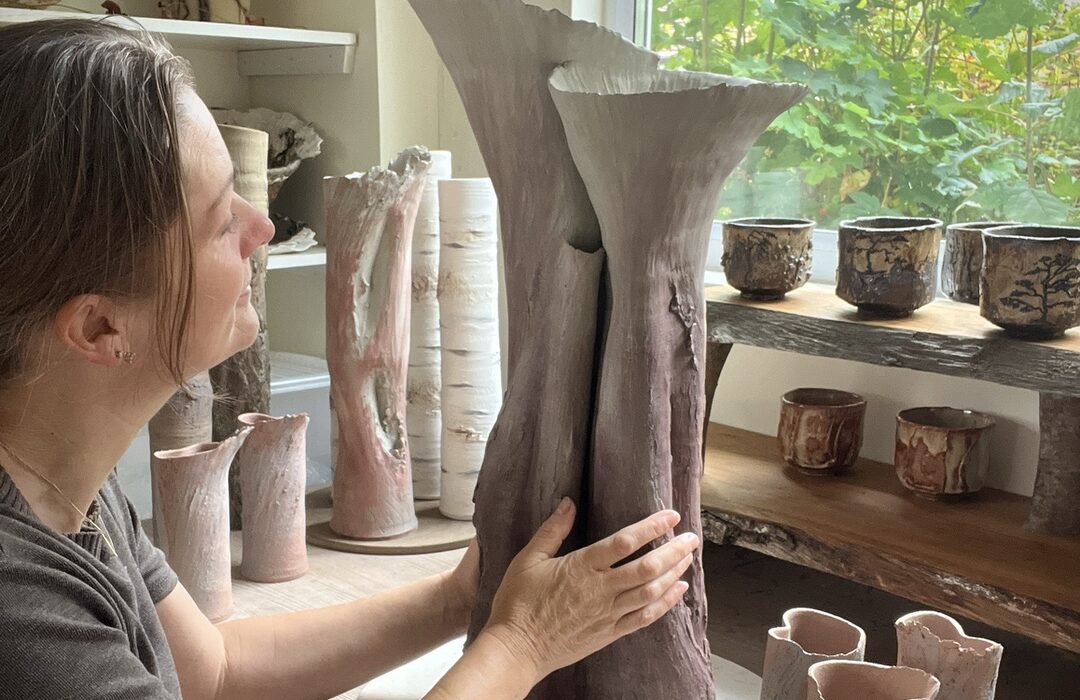
For me, wellbeing through art begins with presence. When my hands meet clay, attention settles into something tangible. I notice pressure, temperature, moisture and movement. Thoughts become quieter as the material asks me to stay with what is happening in front of me.
This quality of attention is one of the reasons clay has become such an important part of my own wellbeing.
How does making art support wellbeing?
Research increasingly recognises a relationship between creative activity and wellbeing. The World Health Organization reviewed more than 3,000 studies examining arts and health and found evidence for the role of arts engagement in health promotion, prevention and the management of a range of health conditions.
One small study from Drexel University also found that 45 minutes of art-making was associated with a significant reduction in cortisol, a hormone involved in the stress response, across a group of healthy adults. Participants used materials including modelling clay, collage and drawing materials, and previous artistic experience did not appear to determine the response.
These findings interest me because my own experience of making is deeply physical. Working with clay brings me into my hands and back towards my body. The process has weight and resistance. I cannot stay entirely inside my thoughts because the material continually asks me to respond.
“Clay gives my attention somewhere to rest. When I become absorbed in making, I often feel myself returning to a steadier and more grounded place.”
Clay and wellbeing in my own creative practice
There are days when I arrive in the studio carrying the residue of everything else happening in life.
I may feel tired, emotionally full or mentally scattered. I rarely expect clay to provide an instant solution. What it gives me is a way of becoming present with myself.
Throwing has rhythm. Carving asks for concentration. Hand-building slows the movement of my hands. Even preparing clay creates repetition that can feel reassuring.
My work with nature deepens this process further. Walking among trees, observing bark, collecting memories of landscapes and sometimes working outside all influence the vessels I eventually make. The relationship between nature, clay and wellbeing has become central to my artistic research.
Research into nature connectedness has found a positive association with wellbeing, including positive emotion, vitality and life satisfaction. This feels familiar to me because my most restorative experiences often involve both making and nature. The two seem to speak the same language of attention.
Can ceramic art support wellbeing for others?
My MA in Fine Art Ceramics explored the question: Can ceramic vessels become activators for wellbeing?
I remain curious about this rather than treating it as something conclusively answered. A ceramic vessel is not a treatment, and I do not claim that owning an artwork produces a particular health outcome. My interest lies in the relationship people develop with objects, materials and spaces.
A handmade vessel can invite touch. Its surface may remind someone of bark, stone, earth or a familiar landscape. Its form may create a moment of stillness within a room. Someone may simply enjoy seeing it in changing morning and evening light.
These experiences matter because wellbeing can also be supported through ordinary moments of connection, attention and meaning.
This is where I see ceramic art for wellbeing becoming particularly interesting. The artwork does not need to ask anything of the person living with it. It can remain quietly present and available to be noticed.
Nature-inspired ceramics and a sense of connection
Much of my work develops from biophilic connection, our human relationship with the natural world. Tree Vessels, Earth Vessels and Landscape Vessels carry traces of environments I have spent time observing and experiencing.
I am interested in translation rather than literal representation. Bark may become texture. The movement of branches may influence a form. Wild clay may bring the physical geology of a particular place directly into the vessel.
When one of these pieces moves from my studio into somebody’s home, the relationship changes again. The vessel begins to belong to another environment and another person.
“My wellbeing is woven into the act of making, and my hope is that something of that attention and connection travels with the finished piece into the life of someone else.”
Art for wellbeing within the home
The objects we choose to surround ourselves with contribute to the character of our interiors.
Handmade art carries evidence of time, human touch and material transformation, creating a very different presence from something produced anonymously and repeatedly.
For collectors and interior designers, nature-inspired sculptural ceramics can bring texture, organic form and a connection with earth-derived materials into a space. For the individual living with a piece, the relationship can become personal over time.
A vessel may mark a significant moment, remind someone of a landscape they love, or simply become an object they enjoy pausing beside each day.
For me, this is where art and wellbeing meet most naturally. The value sits within relationship, presence and experience.
You are invited to explore my Collections and notice how the different vessels make you feel.
Perhaps spend a little longer with the forms that hold your attention.
Which pieces bring you a sense of connection, stillness or recognition, and what might that tell you about the kind of art you want to live with?
References
Capaldi, C.A., Dopko, R.L. and Zelenski, J.M. (2014) ‘The relationship between nature connectedness and happiness: a meta-analysis’, Frontiers in Psychology, 5, article 976.
Fancourt, D. and Finn, S. (2019) What is the evidence on the role of the arts in improving health and well-being? A scoping review. Copenhagen: WHO Regional Office for Europe.
Kaimal, G., Ray, K. and Muniz, J. (2016) ‘Reduction of cortisol levels and participants’ responses following art making’, Art Therapy, 33(2), pp. 74–80.
Nan, J.K.M. and Ho, R.T.H. (2017) ‘Effects of clay art therapy on adults outpatients with major depressive disorder: A randomized controlled trial’, Journal of Affective Disorders, 217, pp. 237–245.
Pallasmaa, J. (2012) The Eyes of the Skin: Architecture and the Senses. Chichester: Wiley.


