Creating in Presence

Creating in Presence

“The key to spiritual growth and freeing ourselves from this worldly thinking is realising that it is the presence with which we do something that matters, not what we do.”
Hollie Holden, ACIM

This sentence has stayed with me for some time. It feels simple, yet it asks something profound of us. It suggests that transformation is not located in achievement, productivity or visibility, but in the quality of attention we bring to each moment.

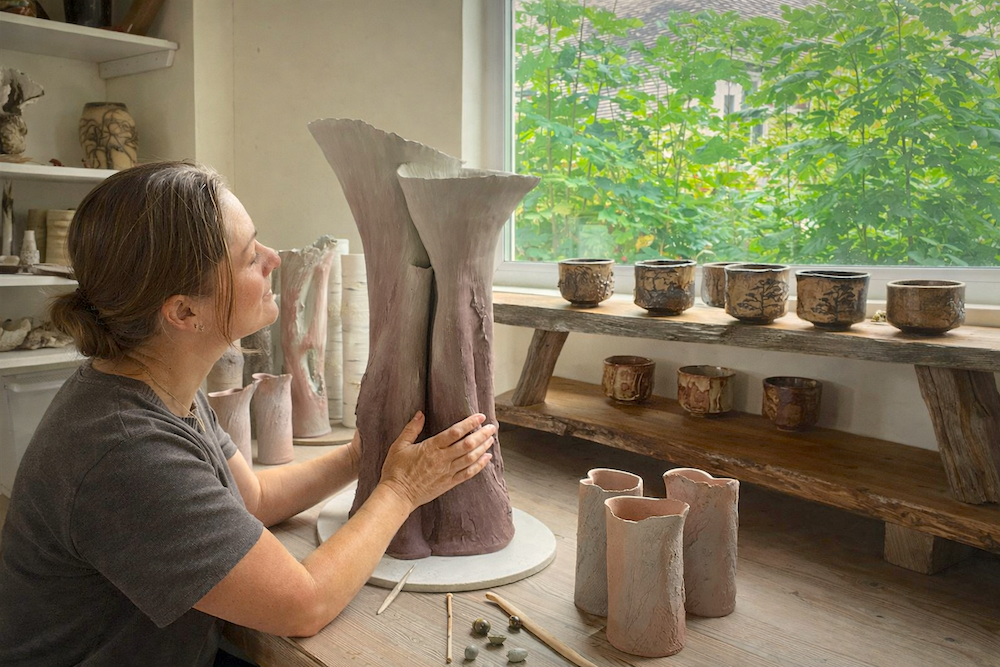
In my own life, this has become most apparent in the studio.

When I enter the space where I work with clay, there is always the temptation to think about outcomes. What will this piece become? Will it be well received? Does it align with a collection? Those thoughts arise easily. They are part of living in a world that measures and evaluates.

Yet I have learned that when I create from that place alone, something feels slightly disconnected. The work may be technically sound, but it lacks depth. It is only when I soften my focus and return to presence that the clay begins to respond differently.

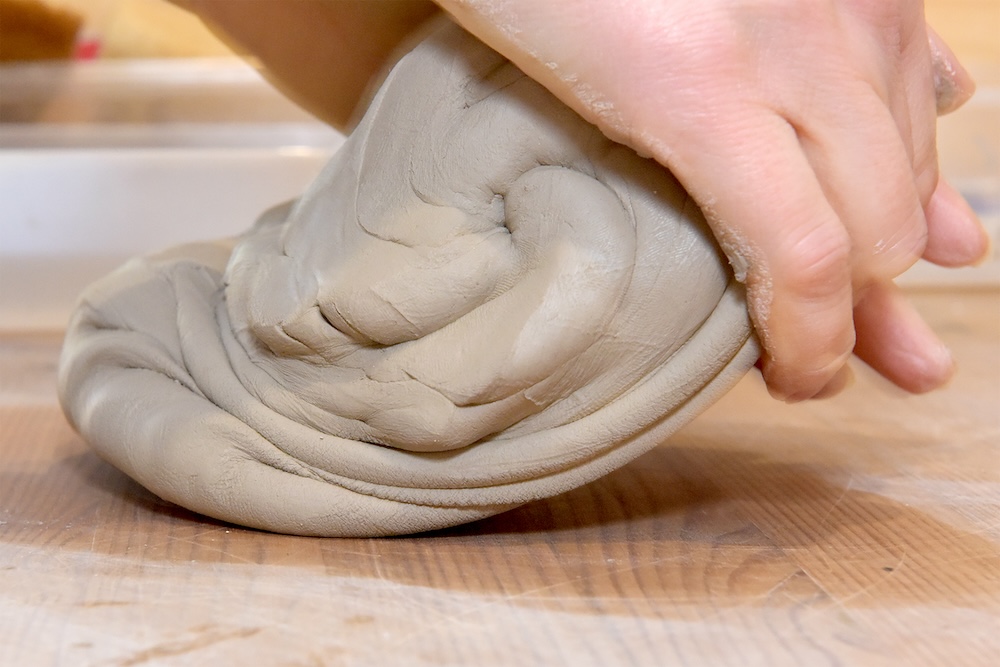
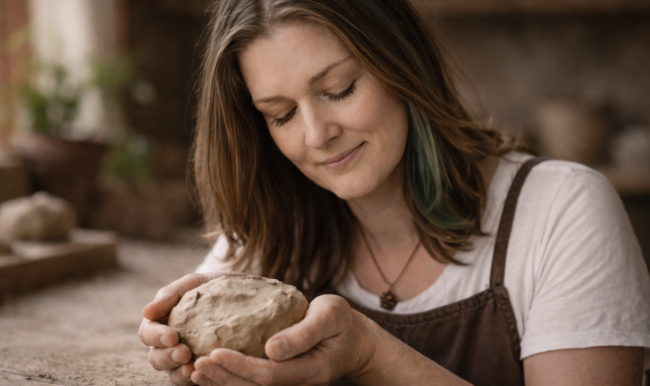
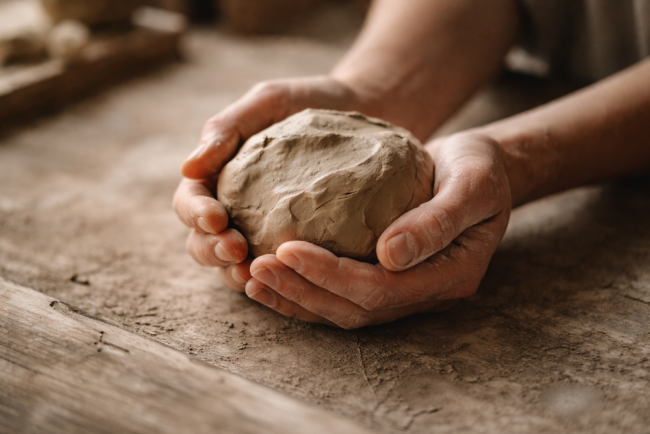
Presence, for me, begins with the body. I notice my breath. I feel the weight of the clay in my hands. I sense the temperature of the studio, the texture of the surface beneath my fingertips. These small acts of attention anchor me. They draw me away from mental projection and into immediate experience.

In this state, the making becomes less about producing and more about listening.

Clay is honest. It does not respond well to force or distraction. If I am unsettled, it shows in the tension of the form. If I am calm and attentive, the vessel often carries a quiet steadiness. This is not mystical. It is relational. The material mirrors the energy with which it is handled.

The quotation from Hollie Holden resonates because it reflects what I experience daily. Spiritual growth, in my understanding, is not separate from ordinary life. It is not confined to meditation cushions or retreats. It is expressed in how I shape a rim, how I smooth a surface, how I pause before altering a curve.

The presence I bring to these actions changes the quality of the outcome, yet it also changes me.

There is research to support the value of this kind of attentive engagement. Studies in mindfulness and contemplative practice show that sustained, non-judgemental awareness of present-moment experience can reduce stress, enhance emotional regulation and support neural integration. Activities that involve repetitive, tactile focus, such as working with clay, naturally invite this state. They slow mental rumination and encourage embodied awareness.

I notice that when I create in presence, time feels different. It expands. The pressure to complete fades. What remains is a gentle concentration that feels nourishing rather than depleting. Even if the piece does not survive the kiln, the time spent with it has already offered something valuable.

This understanding has gradually extended beyond the studio.

When I am with a Reiki client, the same principle applies. The techniques matter, yet what truly shapes the session is the quality of attention I bring. Am I fully there, or am I subtly preoccupied? Clients often sense the difference before I do. Presence is palpable.

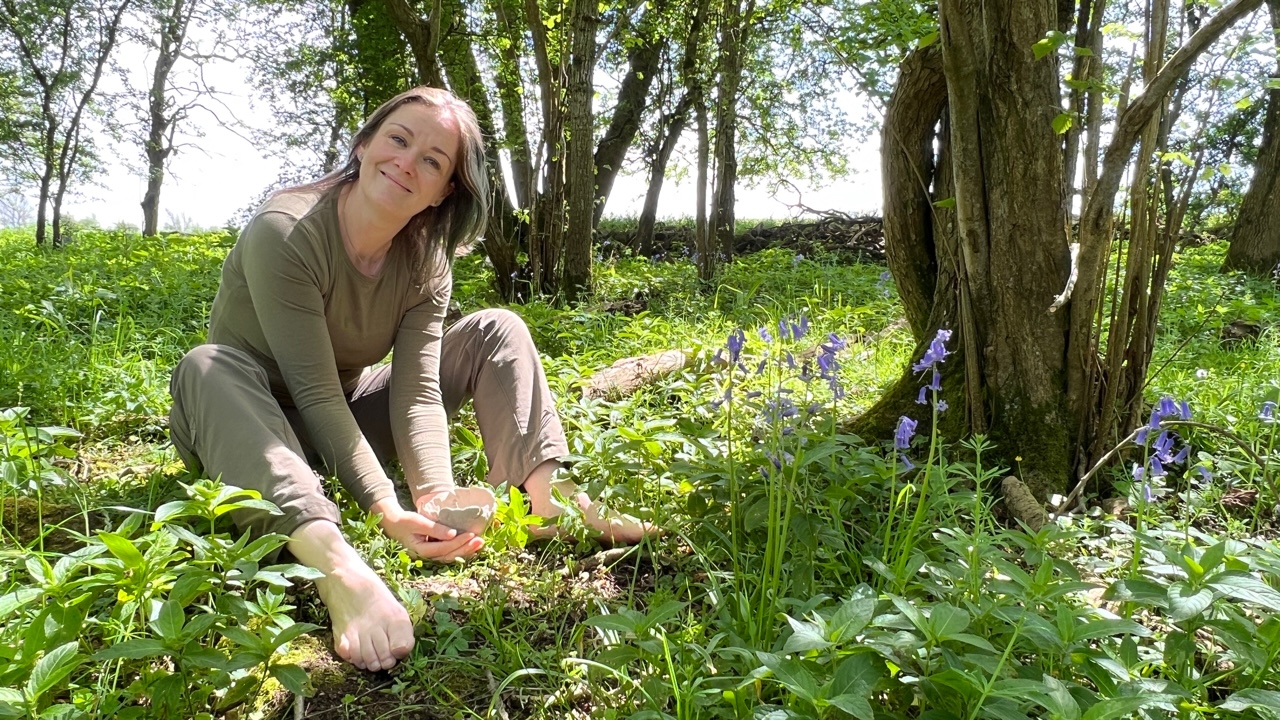
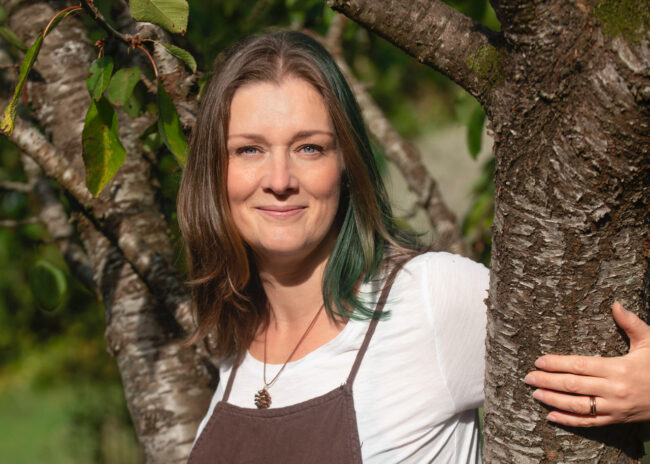
The same is true in nature. When I walk among trees, I can choose to think through problems or I can allow myself to simply experience the movement of light, the sound of leaves, the texture of ground underfoot. The latter shifts something inside me. It feels as though the boundary between inner and outer softens.

Creating in presence becomes a practice of freedom. It frees me from the need to measure every action against an imagined future. It frees me from the belief that worth is located in visible results. It brings me back to the simplicity of this moment, this breath, this touch of clay.

There are days when I forget. I move too quickly. I compare. I strive. On those days, the work feels heavier. Returning to presence is rarely dramatic. It is often as small as placing my hands on the clay and pausing long enough to feel its quiet solidity.

In that pause, something opens.

The world encourages us to focus on what we are doing and how it appears. Presence asks a different question. How are we being while we do it?

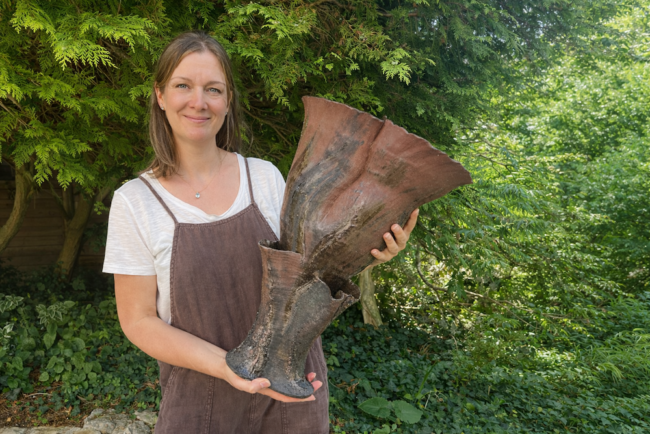
When I shape a vessel from this place, I sense that it carries more than form. It carries the quality of attention with which it was made. Perhaps this is why certain objects feel calm or grounding in our homes. They hold the residue of presence.

As you reflect on your own creative or daily practices, you might ask yourself where your attention rests. Is it ahead of you, measuring and anticipating, or is it here, in the texture of what you are touching right now?

The invitation is gentle. It is not to change what you do, but to notice how you are while you do it.

Clay, Trees and the Art of Listening to What Lifts You

Recording the recent episode of An Art To It was an invitation to articulate what has shaped my creative life and my practice as both a maker and someone who cares deeply about human wellbeing in relation to the natural world. I spoke with Elaine Dye about the threads that have woven together my journey, from early encounters with art to the quiet listening that unfolds when I work with clay or walk among trees.

The An Art To It podcast explores the point at which passion becomes profession, and what it means to live creatively and sustainably as an artist. In our conversation, I shared how creativity has been present since childhood, nurtured through formative experiences with colour, texture and making, and how these early influences continue to shape how I work today.

At the heart of our discussion was the blending of two worlds: ceramics as a material practice and nature as a ground for wellbeing. I described how clay is not just a medium but a site of attunement, a way for me to engage the body, senses and awareness in a slow, intentional focus that mirrors the calm of walking in woodland or beside water. Making in this way has taught me that my studio practice is not separate from lived experience, but a continuation of the same sensibilities that draw me toward forests, earth, stone and breath.

Why making is about listening, not forcing

In the interview, I reflected on how being in nature has shaped my understanding of creative practice. Trees, soil and clay all communicate in their own ways. They offer feedback rather than resistance. When I find myself out of rhythm — scattered or ungrounded — working with clay in the studio sometimes helps bring coherence, but other times the forest does this work more efficiently. Walking slowly among trees reduces the incessant chatter of the mind, and subtle rhythms of breath and step begin to anchor the body again. This is not a metaphor. It is an experiential truth that many people recognise when they spend extended time in calm natural settings.

Within forest environments, there are measurable effects on human physiology. Time spent among trees has been associated with reductions in stress hormones, lowered blood pressure and shifts in brainwave patterns towards calmer states. These effects are part of the larger phenomenon often described as forest bathing — a practice rooted in Japanese shinrin-yoku that emphasises sensory immersion in nature. Whilst we spoke from lived experience rather than academic exposition, the science supports what many people intuit: being in nature regulates the nervous system and invites the body back into presence.

Drawing clay is similar in its effect because it calls for attention to be present in the moment. Whilst working with clay, one is naturally drawn into sensory engagement — touch, temperature, pressure, rhythm — all of which quiet the mind and encourage a bodily awareness that feels akin to walking on a forest floor.

Reflections on imposter syndrome and creative identity
Another part of the conversation touched on creative identity. Many makers carry echoes of self-doubt long after they have mastered technique or process. In the interview, I shared how feelings of uncertainty are less a barrier to creativity and more a familiar companion on a long journey. Imposter syndrome does not disappear; it becomes a measure by which I have had to learn to trust curiosity instead of striving for certainty.

This is a theme that resonates with many listeners because so much of art is about showing up even when the interior critic is loudest. Creative work, whether in clay or in any other material form, asks for patience with process. It invites the maker to stay with confusion long enough to hear something new emerge.

Beyond the studio: materials, meaning and mind

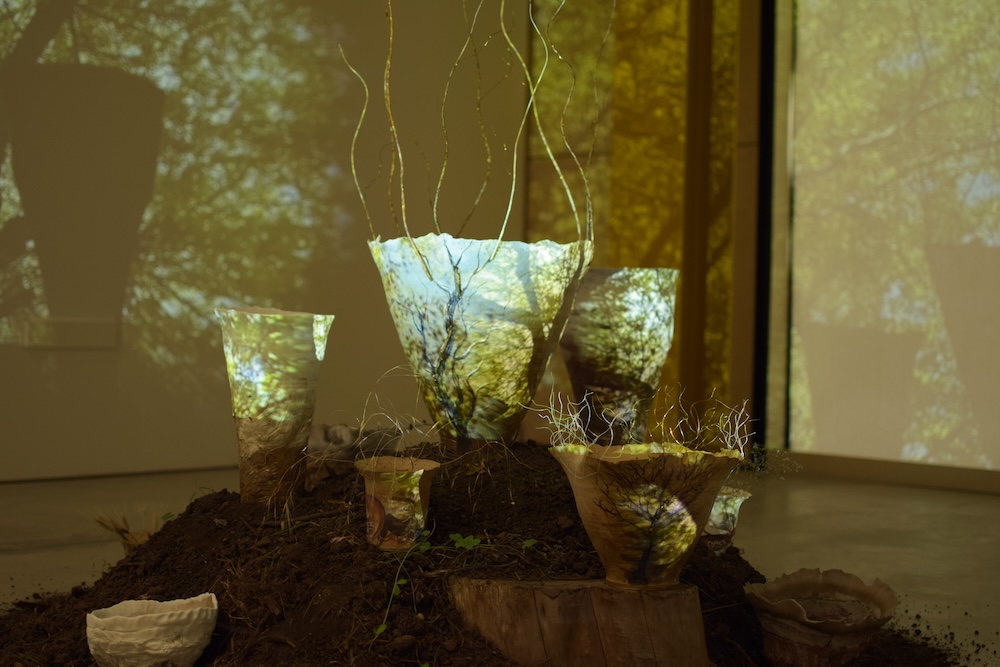
A significant part of our talk was about materials and meaning. My vessels are shaped slowly, in relation to the environment where they originate and the landscape that inspires them. Clay is porous. It carries traces of place — sediment, moisture, temperature — even before it is shaped. In my research practice I have explored how materials can act as conduits for nature’s voice, and how the act of shaping clay can reflect a deeper dialogue between maker and matter.

This perspective shifts the role of ceramics from object to relationship. A vessel is not merely functional or decorative. It is an intersection of place, time and intention.

What I hope listeners take from the conversation

When I reflect on why I enjoy speaking about this work, it is because it invites others to notice how making and nature are intertwined with wellbeing. Creativity is not a luxury reserved for studio spaces only; it is a way of seeing, sensing and responding. Nature supports this way of being because it arises from the same fundamental processes — pattern, rhythm, adaptation, resonance.

For those who feel called to explore this further, whether through making with clay, walking among trees, or simply pausing to breathe more fully, my ceramic collections offer a quiet extension of this conversation within the home.

These vessels are shaped with intention and care, and each carries an invitation to slow down, notice and connect. You can explore the full range on my website and discover pieces that resonate with your own journey of creative presence and connection.

Listening to An Art To It was a generous experience because it allowed space for vulnerability, reflection and honesty about what it means to live creatively. I hope that the words and ideas shared continue to invite listeners into their own reflective practice.

References

Wilson, E.O. (1984) Biophilia. Cambridge, MA: Harvard University Press.

Li, Q. (2018) Shinrin-Yoku: The Art and Science of Forest Bathing. London: Penguin Random House.

Bratman, G.N., Daily, G.C., Levy, B.J. and Gross, J.J. (2015) ‘The benefits of nature experience: Improved affect and cognition’, Landscape and Urban Planning, 138, pp. 41-50.

Clay Attunement

Clay attunement is a quiet practice of listening. It is less about shaping a material and more about allowing a relationship to form between hands, breath and earth. When I work with clay, I am not asking it to become something. I am paying attention to what it already holds and how it responds when met with patience and care.

Clay is a living archive. It carries memory of geology, water, pressure and time. When it is rehydrated and placed in the hands, it does not arrive neutral. It arrives with history. Attunement begins when I slow down enough to sense that history rather than override it with intention.

In the studio, this means working without urgency. I notice the temperature of the clay, how quickly it yields, where it resists and where it softens. These responses guide my movements. Clay teaches through feedback, and attunement grows when I allow myself to be guided rather than to direct.

What does it mean to attune to clay?

Attunement is a process of regulation and alignment. In therapeutic language, it describes the ability to sense and respond to another being’s state. With clay, this process is tactile and immediate. My hands become receptors. Breath slows naturally. Attention drops from the head into the body.

This embodied listening mirrors experiences found in nature. Just as walking through woodland encourages a quieter pace and heightened awareness, working with clay invites presence through touch. There is no requirement to analyse or evaluate. The clay responds honestly, and that honesty becomes a grounding force.

Over time, I have noticed that when I am regulated, the clay behaves differently. It feels more cooperative, more responsive. When I am distracted or holding tension, the clay reflects that too. Attunement therefore becomes reciprocal. It is not only about sensing the clay, but about becoming aware of my own internal state.

Clay as a bridge between body and earth

Clay sits at an intersection between the human body and the natural world. It is soft, receptive and responsive, yet it also carries immense strength once fired. This duality mirrors aspects of human resilience. Through attunement, clay offers a way to explore softness without fragility and strength without rigidity.

Working with clay activates the parasympathetic nervous system through repetitive, rhythmic movement and sustained touch. Research into tactile engagement shows that hand based activities can support emotional regulation and reduce stress responses. While clay work is not therapy in itself, it often creates therapeutic conditions through presence, repetition and sensory grounding.

In my own practice, I notice that time spent with clay often leaves me feeling steadier and more spacious. Problems that felt sharp soften at the edges. Thoughts slow. The body feels held. This is not something I consciously aim for, but something that emerges through attuned engagement.

How does attunement influence form?

When I allow clay to guide form rather than impose design, the resulting vessels carry a different quality. Curves emerge organically. Surfaces retain subtle irregularities that reflect touch rather than perfection. These marks are not flaws. They are records of relationship.

Attuned forms tend to feel calm in the hand and balanced in space. They invite interaction rather than observation alone. When a vessel is shaped through attunement, it often communicates stability and quiet presence without needing explanation.

I am increasingly interested in how these qualities translate into the home. A vessel shaped through attentive listening holds more than function. It holds process. It carries the rhythm of making and the steadiness of clay met with care.

Clay attunement beyond the studio

Attunement does not end when the clay leaves my hands. When a vessel enters someone’s home, a new relationship begins. The weight, texture and form continue to communicate through daily interaction. Holding a cup, placing flowers, resting a hand on a rim. These small moments invite the body back into awareness.

In a world that often prioritises speed and abstraction, clay offers something slower and more grounded. It invites touch. It responds to light. It ages gently. Attuned vessels can act as anchors within domestic spaces, reminding the body of earth based rhythms and the value of presence.

For those who are sensitive to their environments, these subtle cues matter. Materials shape how we feel, often without conscious recognition. Clay, when worked with attentiveness, can support a sense of calm simply through being encountered.

Listening as a creative and healing practice

Clay attunement has taught me that listening is an active process. It requires patience, humility and willingness to respond rather than control. These qualities are as relevant to human relationships as they are to making.

When I am fully present with clay, I feel connected not only to the material but to wider cycles of nature. The clay reminds me that transformation happens through time, heat and trust in process. There is reassurance in this. It mirrors how healing often unfolds slowly and through gentle consistency rather than force.

For those drawn to this way of working, my vessels are created as invitations to experience clay attunement beyond the studio. Each piece is shaped slowly, allowing the material to guide form and surface. You can explore my ceramic collections on my website and see how these vessels may support a quieter, more connected relationship with your own spaces.

As you encounter clay in your life, whether through making or use, you might reflect on how it feels to meet a material that responds honestly to your touch. What changes when you allow yourself to listen rather than lead?

References

Pallasmaa, J. (2012) The Eyes of the Skin: Architecture and the Senses. Chichester: Wiley.

Malchiodi, C.A. (2015) Creative Arts and Play Therapy for Attachment Problems. New York: Guilford Press.

Field, T. (2010) ‘Touch for socioemotional and physical well being: A review’, Developmental Review, 30(4), pp. 367–383.

Ingold, T. (2011) Being Alive: Essays on Movement, Knowledge and Description. London: Routledge.

Privacy Settings
We use cookies to enhance your experience while using our website. If you are using our Services via a browser you can restrict, block or remove cookies through your web browser settings. We also use content and scripts from third parties that may use tracking technologies. You can selectively provide your consent below to allow such third party embeds. For complete information about the cookies we use, data we collect and how we process them, please check our Privacy Policy
Youtube
Consent to display content from - Youtube
Vimeo
Consent to display content from - Vimeo
Google Maps
Consent to display content from - Google